
Subscribe to continue reading
Subscribe to get access to the rest of this post and other subscriber-only content.

Subscribe to get access to the rest of this post and other subscriber-only content.
Becks is a seed corn company. They sponsor a podcast, Across the Acres, that is typically interviewing employees, dealers and farmers while connecting, challenging and inspiring others often about topics in agriculture.
In this podcast, two Beck’s employees, Adam and Ashley Schultz, who are married to each other, were interviewed. The interview had a light-hearted tone but covered lots of serious topics such as being coworkers at the same company, dating and finding a mate, how to sustain a long-term marriage, love languages and other topics.
What was different about this from most podcasts that I listen to about marriage was that the interviewers were not working in the marriage counseling, or coaching professions, and the couple was not sharing about overcoming a big marriage crisis. They were just sharing about life and marriage in a real way. I thought it was a fun but inspiring show.
Across the Acres Special: Valentine’s Day with Adam and Ashley Schultz

Setting up the grid for the field in his computer.

Unloading the ATV

Probing about 8 inches deep.

It takes 5 probes around a GPS point to make up one “sample” bag for the lab to test.
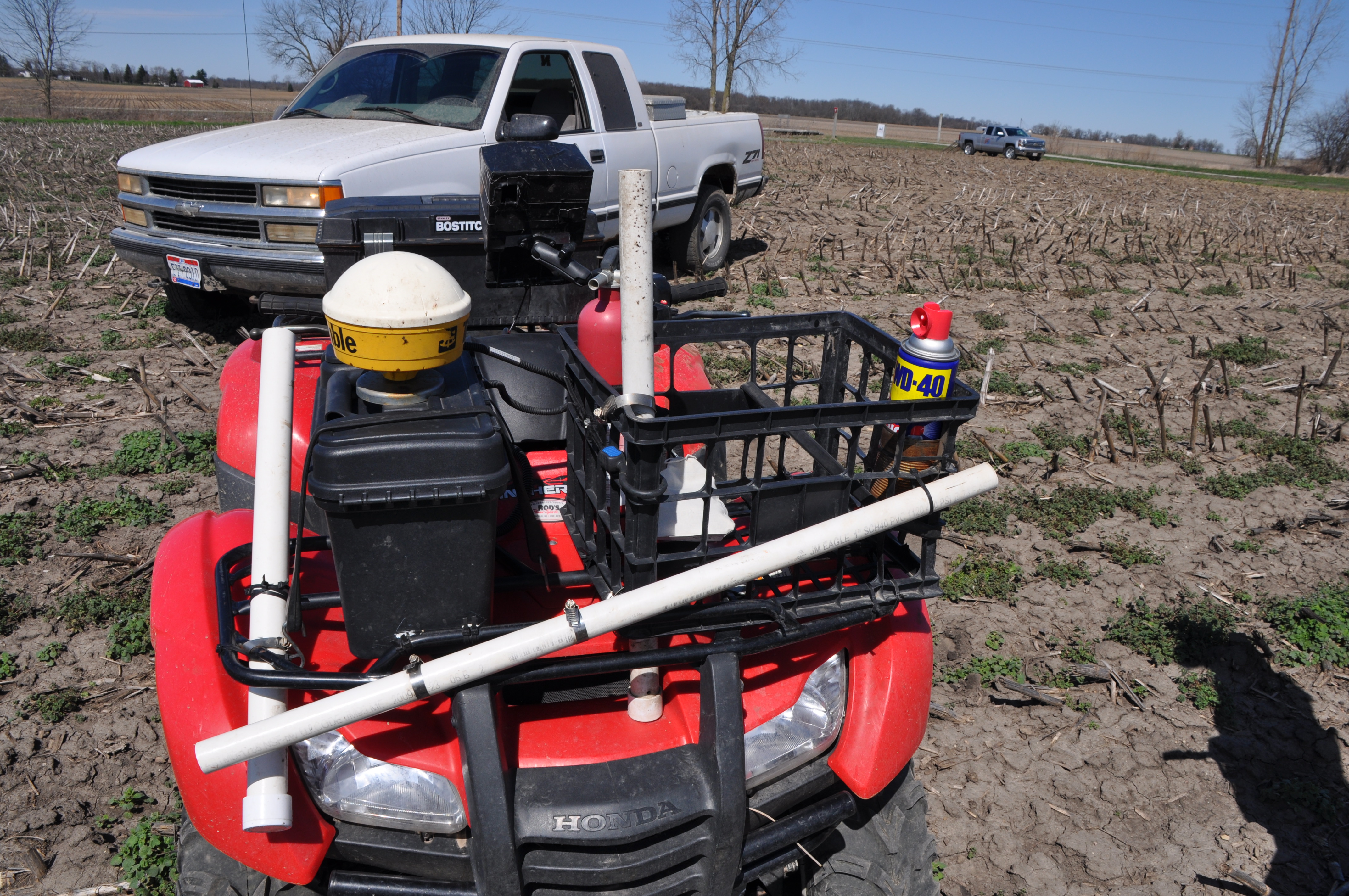
Yes, he has a GPS bubble on his ATV. He finds the points on the grid that way. He samples every 2.5 acres.
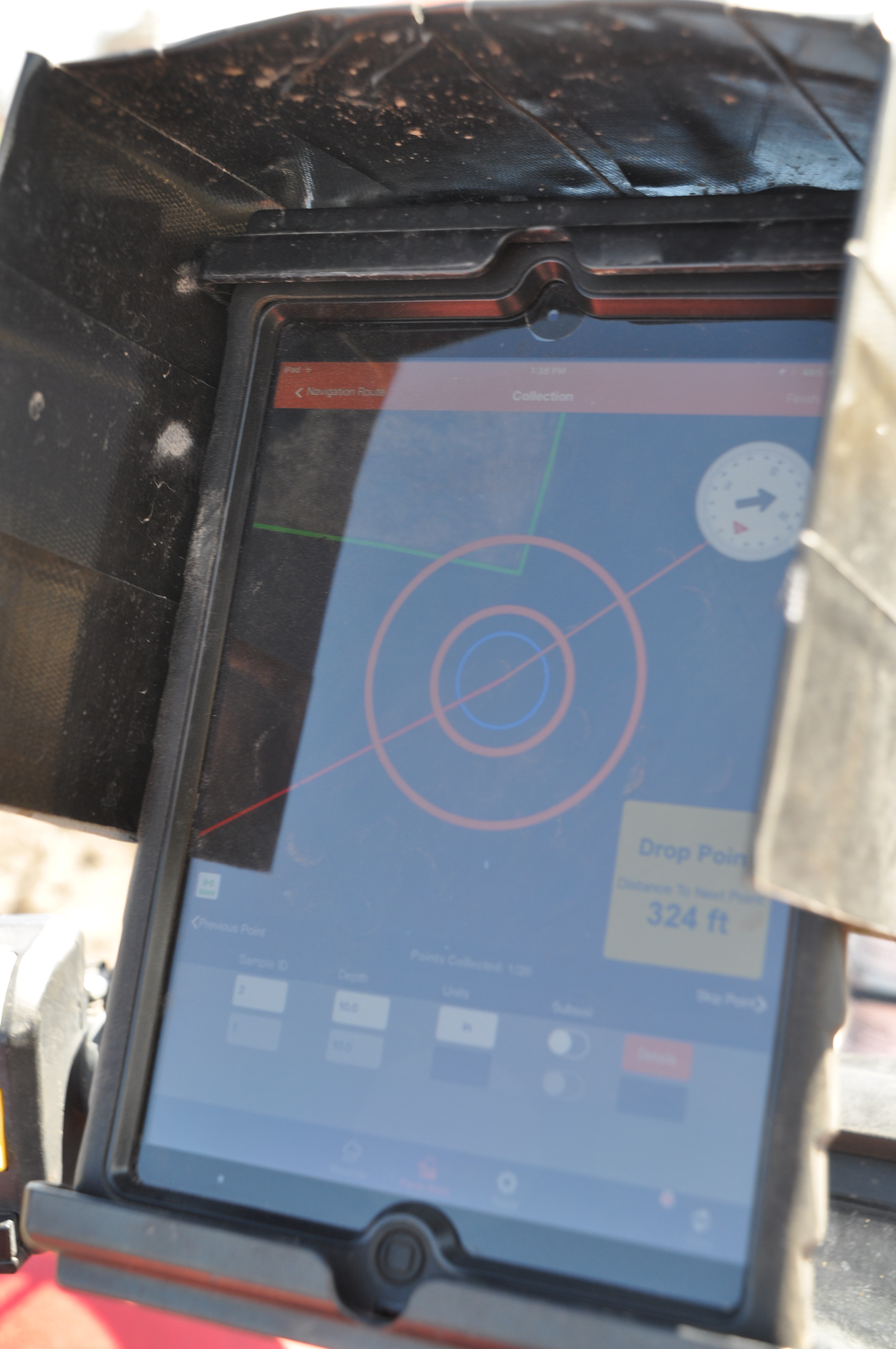
GPS readout around a point.

Heading to the next point.


He sampled 680 acres in less than 12 hours.
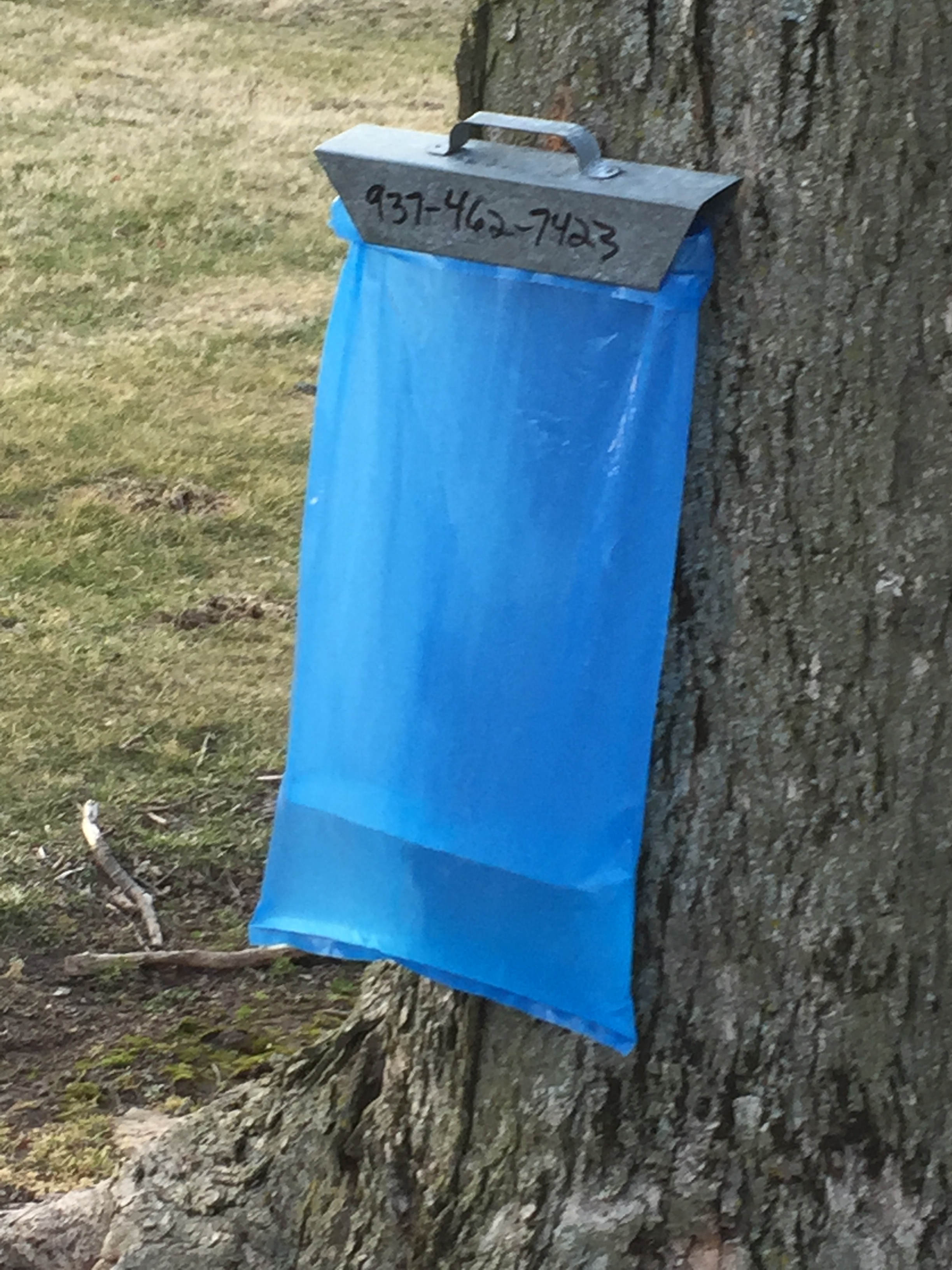
A sap bag hanging off one of the trees in our yard. Ben Hamilton, a friend of ours, has 150 taps in our woods and 25 in our yard. Because it’s been so warm this year Ben expects to get only 110 gallons of maple syrup after boiling all the sap. Usually he can get about 175 gallons.

This is a sap bucket hanging off one of our trees. This shows the tap in the tree and the sap drips out into the bucket.
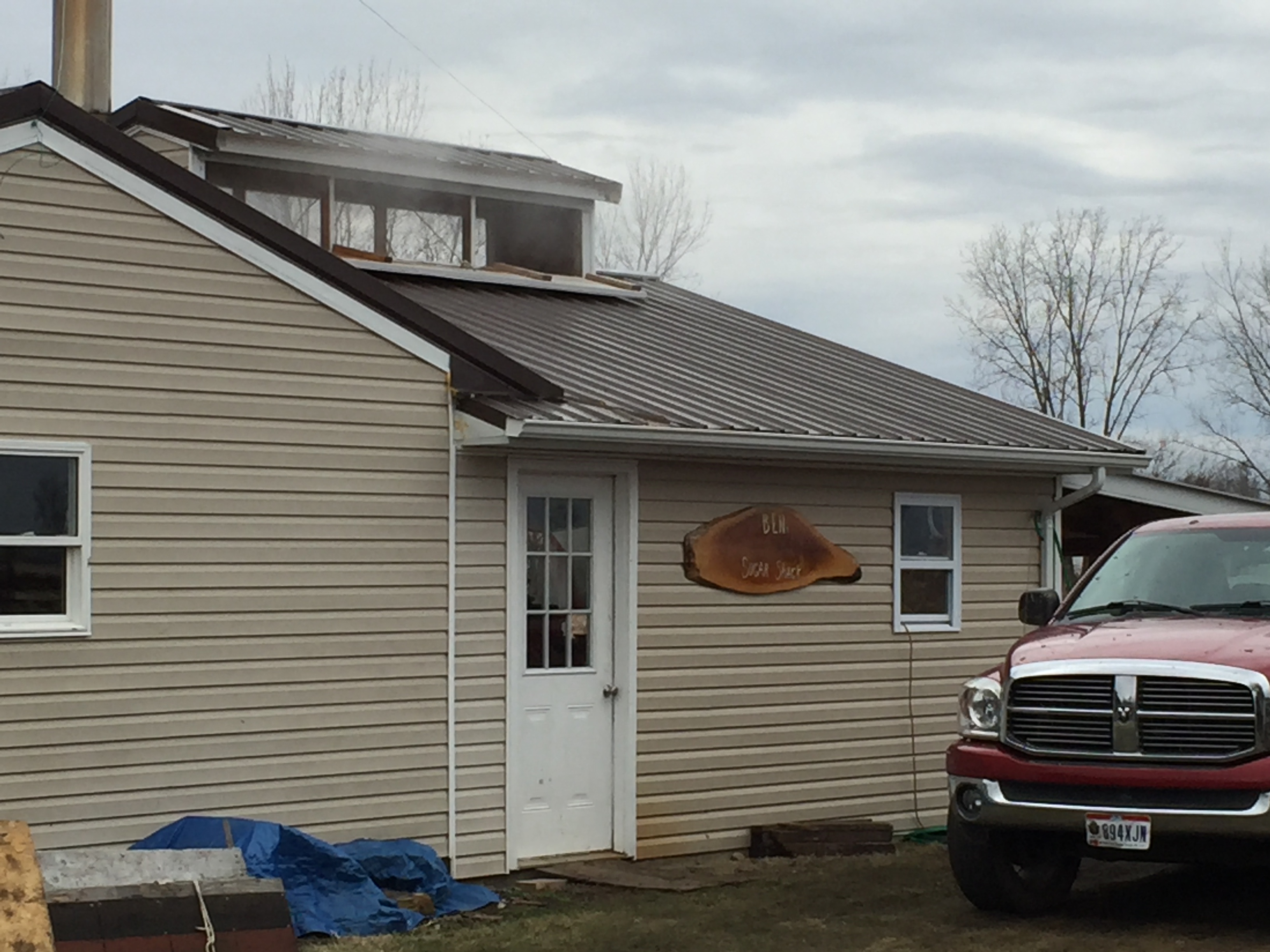
We visited Ben in his “sugar shack” while he was boiling the sap. This year it’s taking about 60 to 65 gallons of sap to make 1 gallon of maple syrup. Most years it just takes about 40 to 45 gallons. It all depends on weather – how many freezing nights and then warming up.

This is the stovepipe out the top of the “shack”. The open windows are actually chicken wire to let the steam and hot air out of the sugar shack. It’s above the boiler.
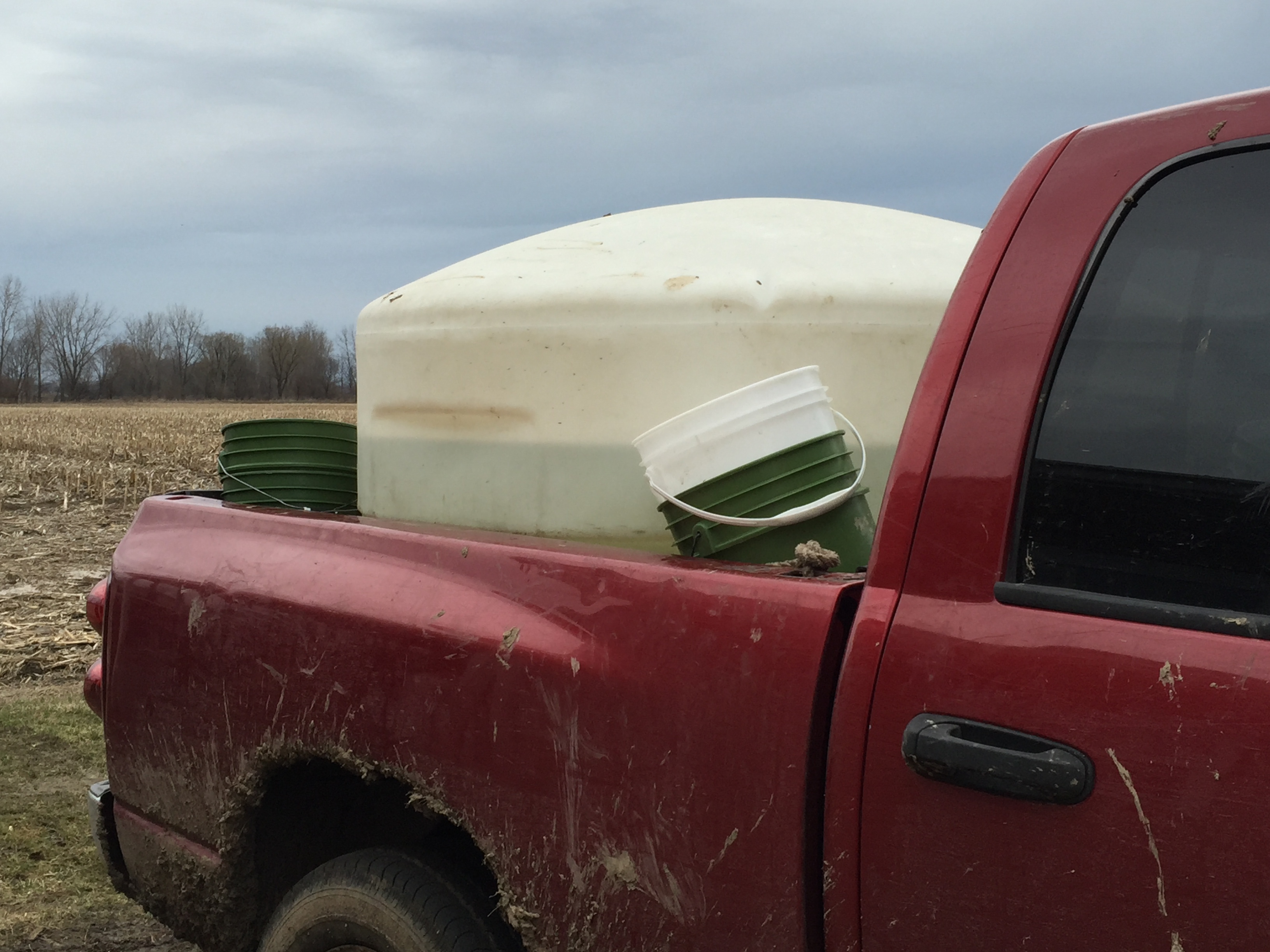
Ben goes around and empties all of his sap bags and buckets and pours them into this 400 gallon tank in the back of his pickup truck. It can take a couple of trips per day to collect all the sap. He has about 535 taps total in various locations.

When he gets back to the “sugar shack” he pumps the sap into another tank that feeds into the boiler.
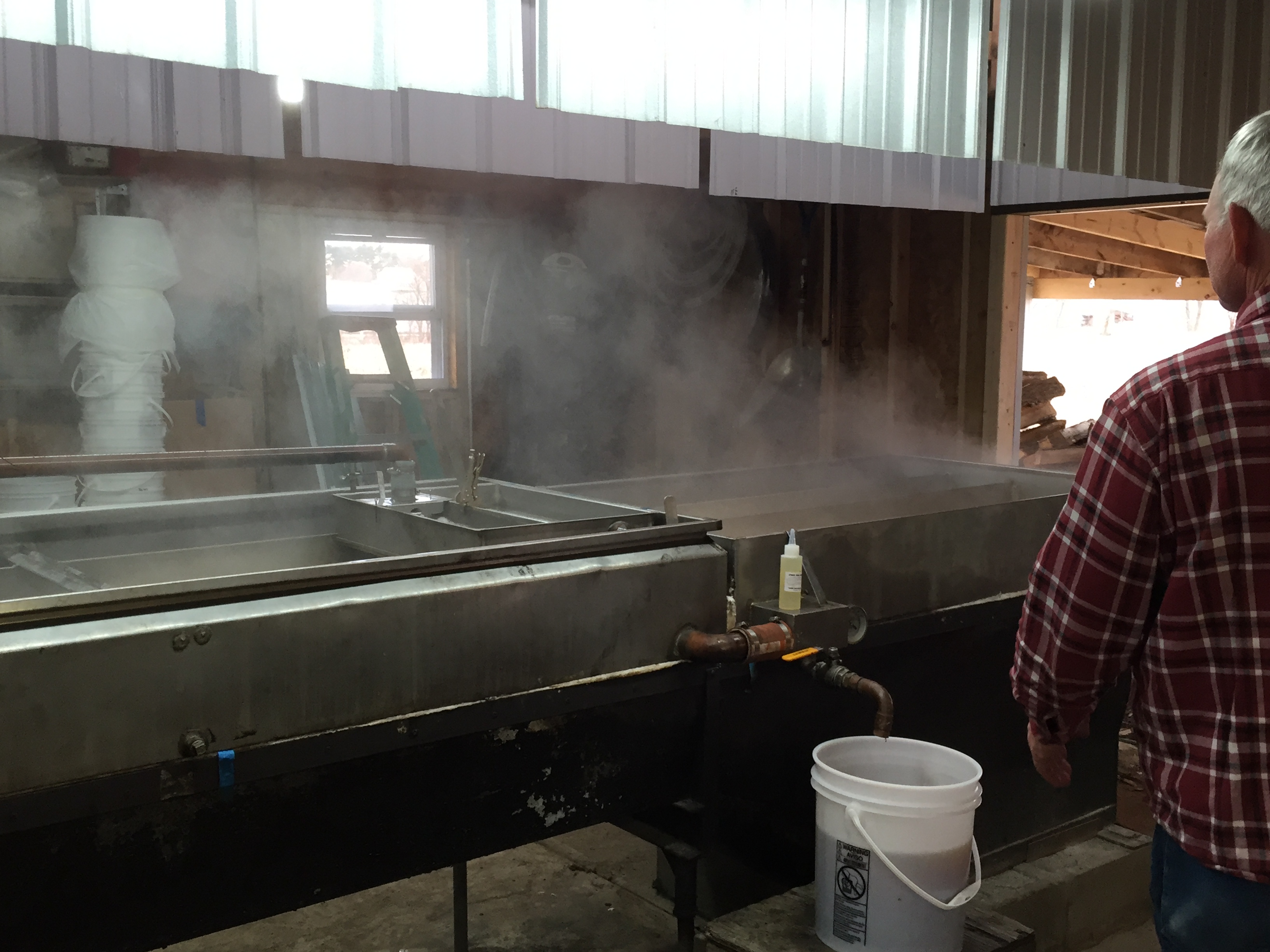
This is what the sap boiler looks like.
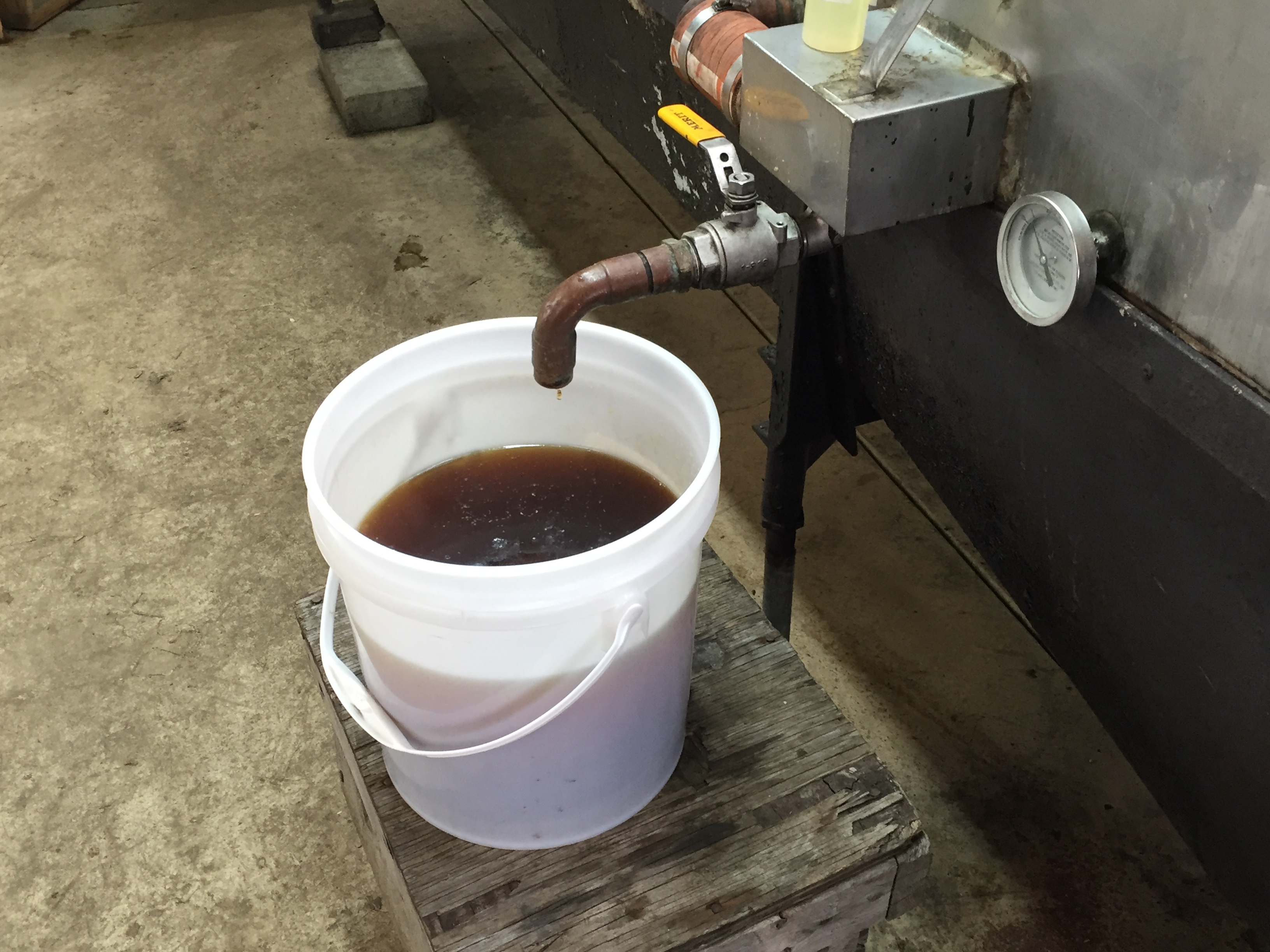
This is one-time filtered pure maple syrup out of the boiler. Maple sap turns into maple syrup when it reaches 219 degrees. Ben filters it through special felt-like filters one more time before bottling.

One end of the boiler. This is where the sap goes first.
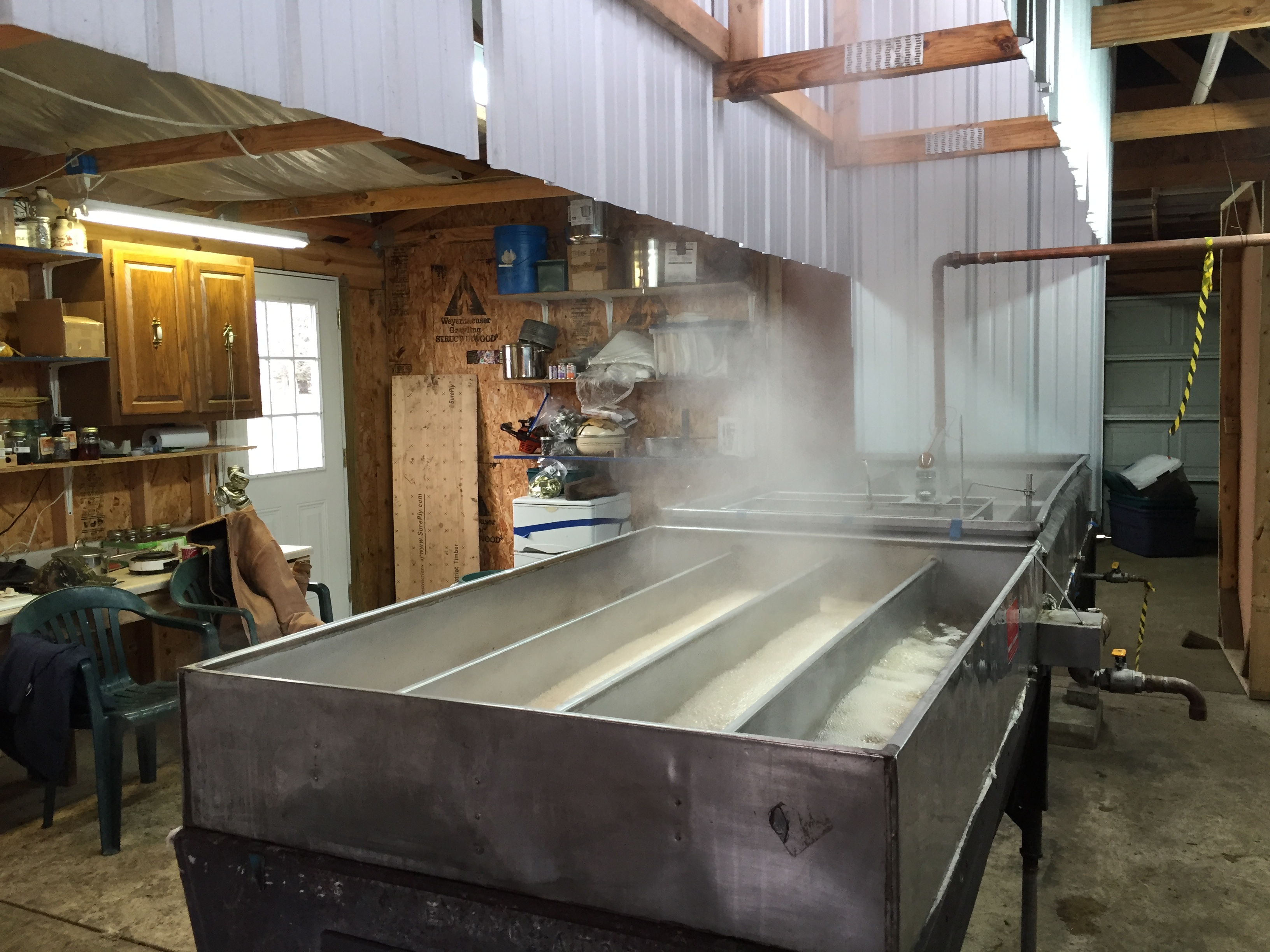
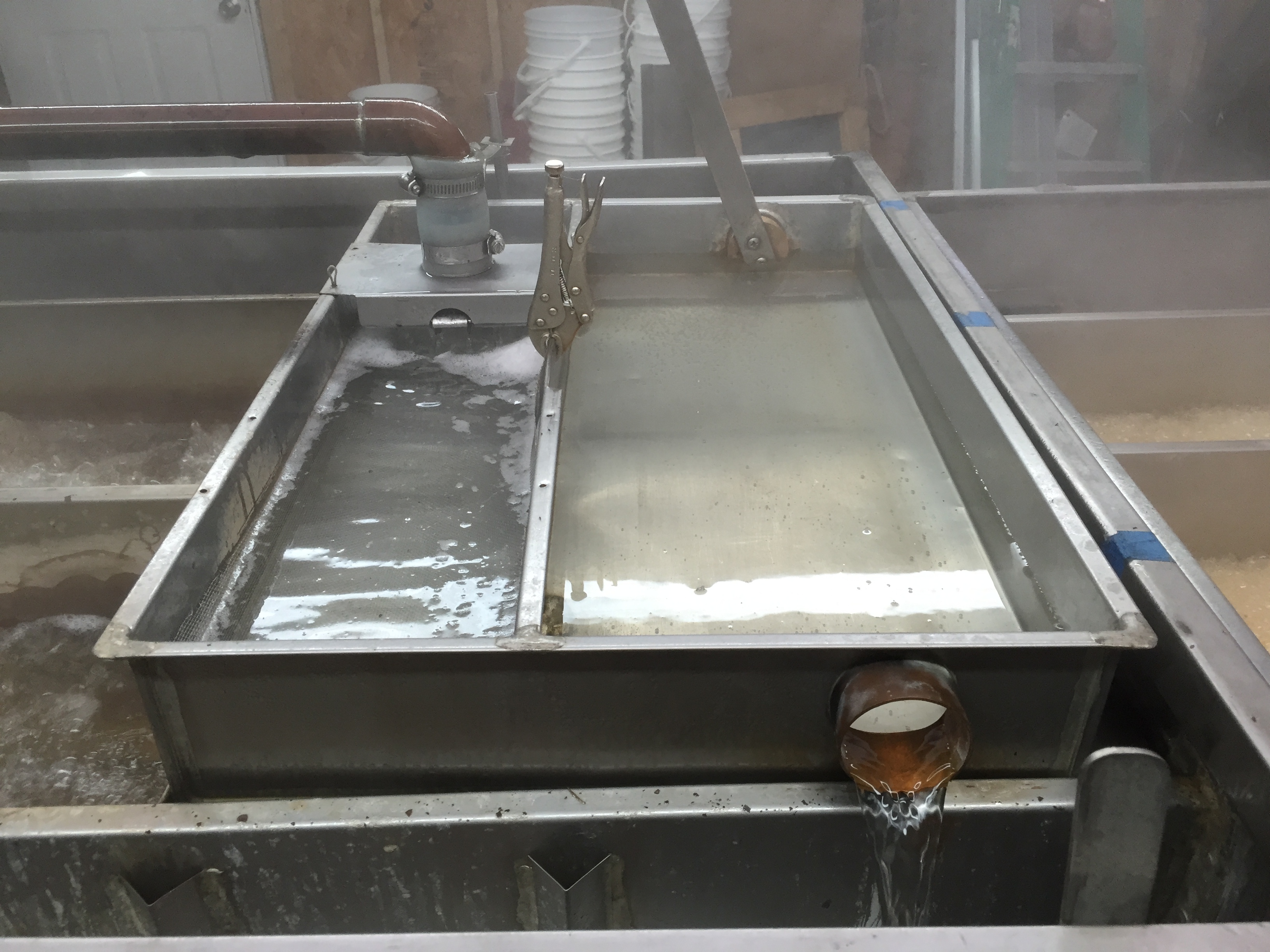
The brown pipe to the left is how the sap from the outside tanks gets into the boiler.
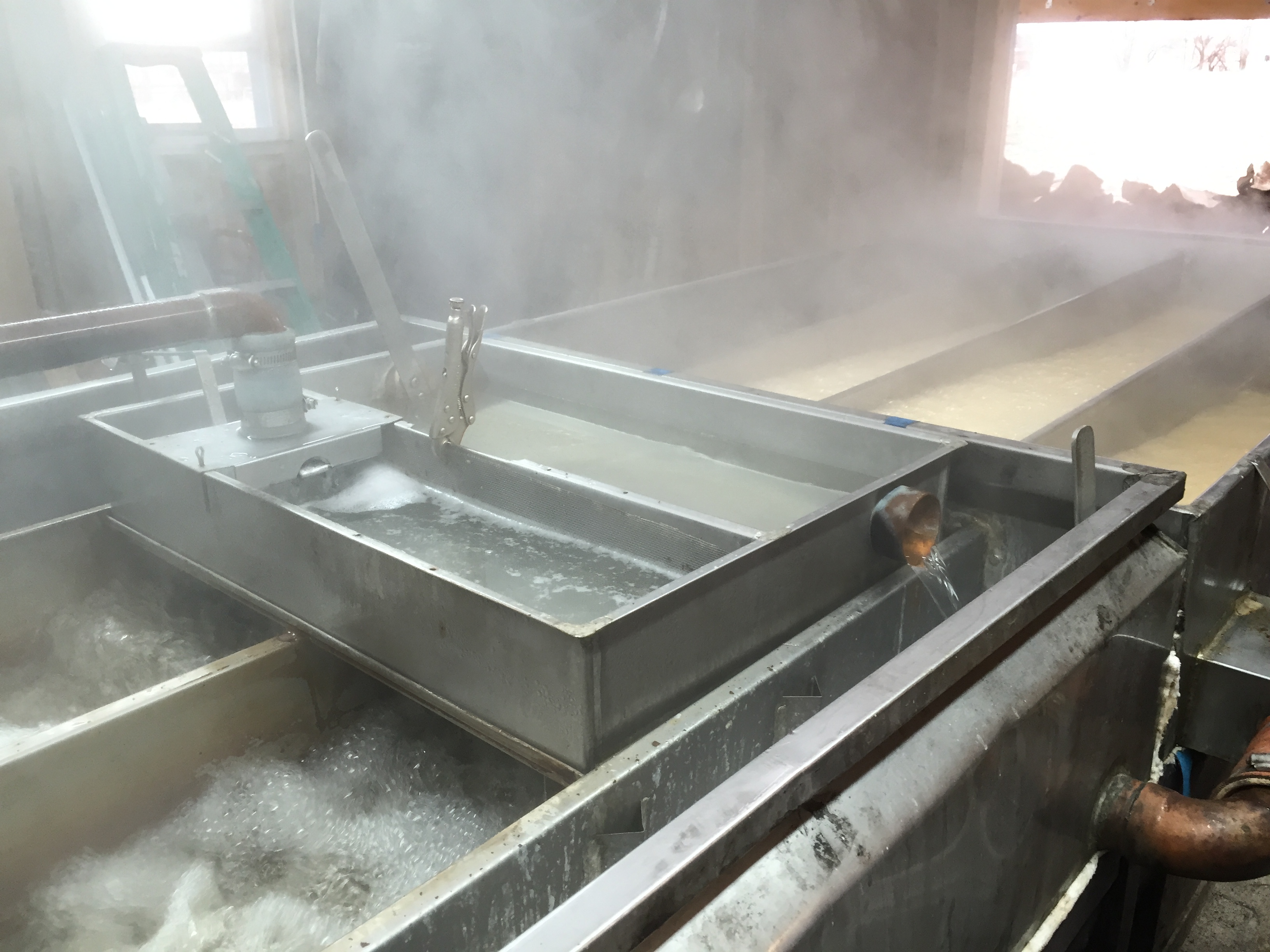
After the “foamy” sap boiling on the left has been there for awhile, it goes into the right side. You can tell it’s boiling down into thicker syrup by the color difference. Sorry you can’t smell it, but trust me, it’s smells amazing in the sugar shack!

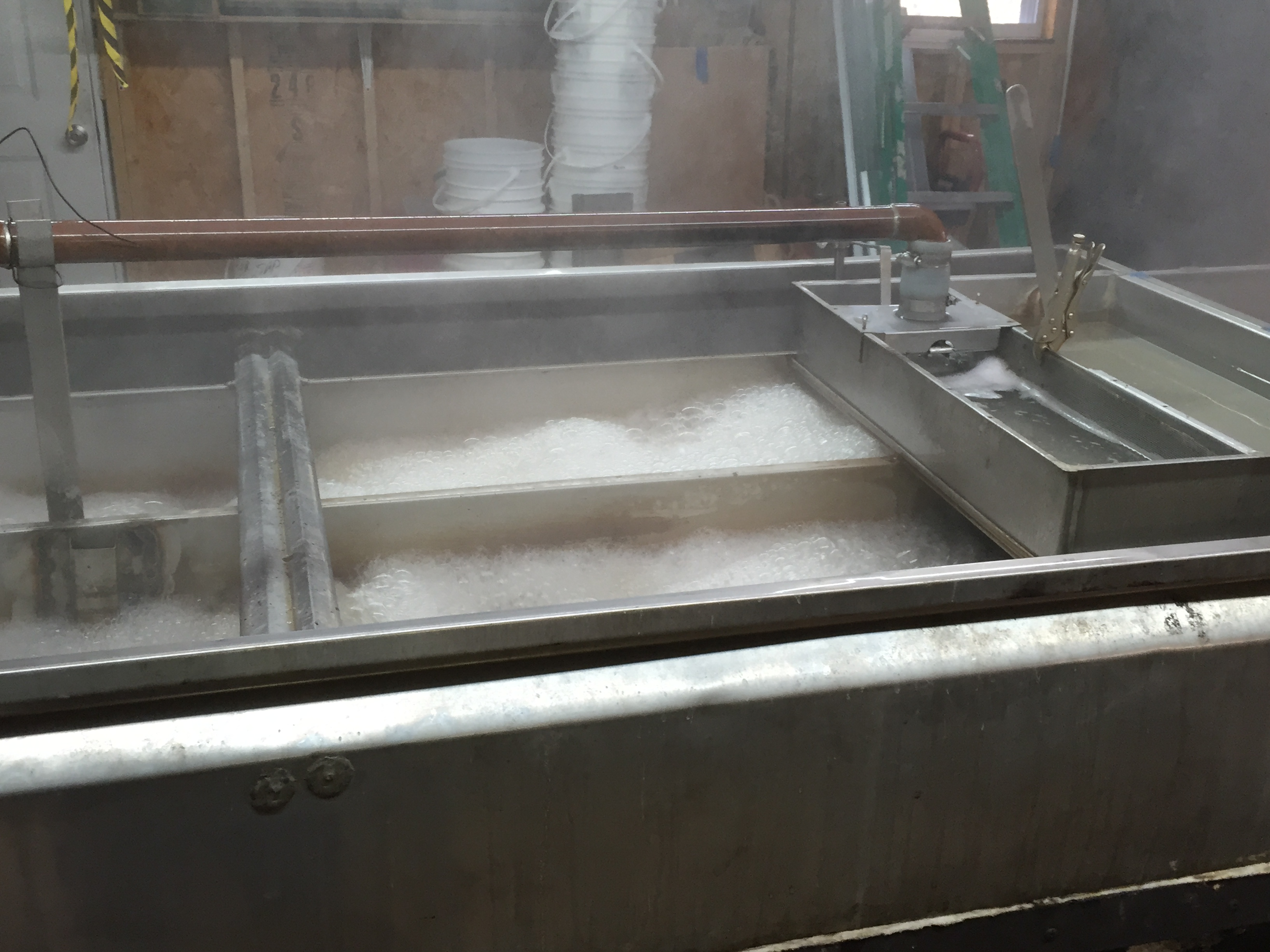

This is the end where the sap is boiling and getting thicker.


Richard Wildman and Ben Hamilton inside the sugar shack.

It takes a lot of firewood to keep the boiler going. When the firepot is empty it can hold about one wheelbarrow full of wood cut in 2-foot lengths. Ben uses about a wheelbarrow every 15 minutes. When we were there late afternoon he had enough sap in the tanks to boil for another 15 hours. That’s 60 wheelbarrows of firewood!

This is the top of the sugar shack where the steam and heat escapes.
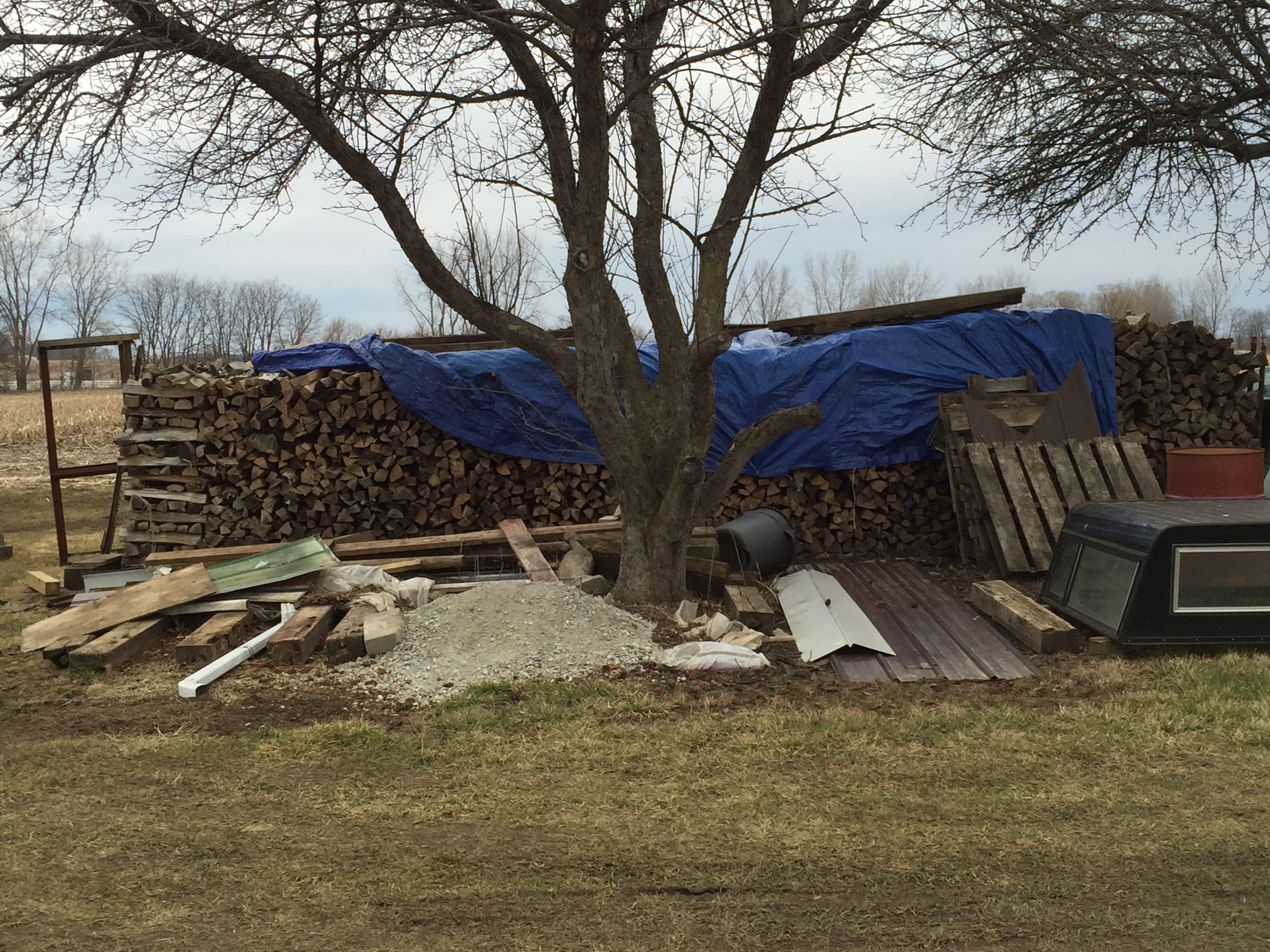
This is just part of the woodpile he uses.


The furnace for the sap boiler.

This is my “payment” from Ben for the year. Yum!!

We started chopping silage for the dairy yesterday.

The corn yield is up and down in these first few fields.

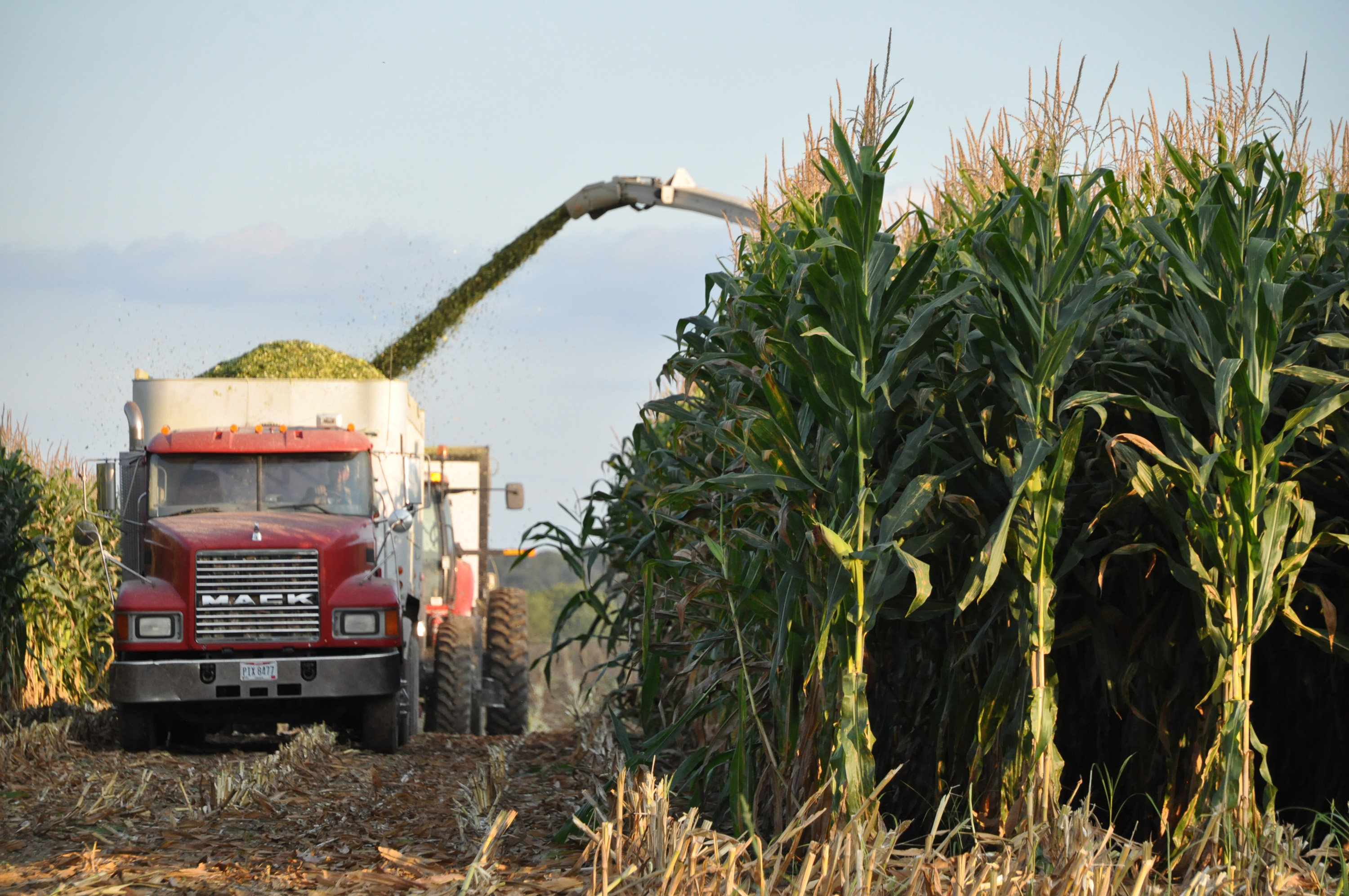
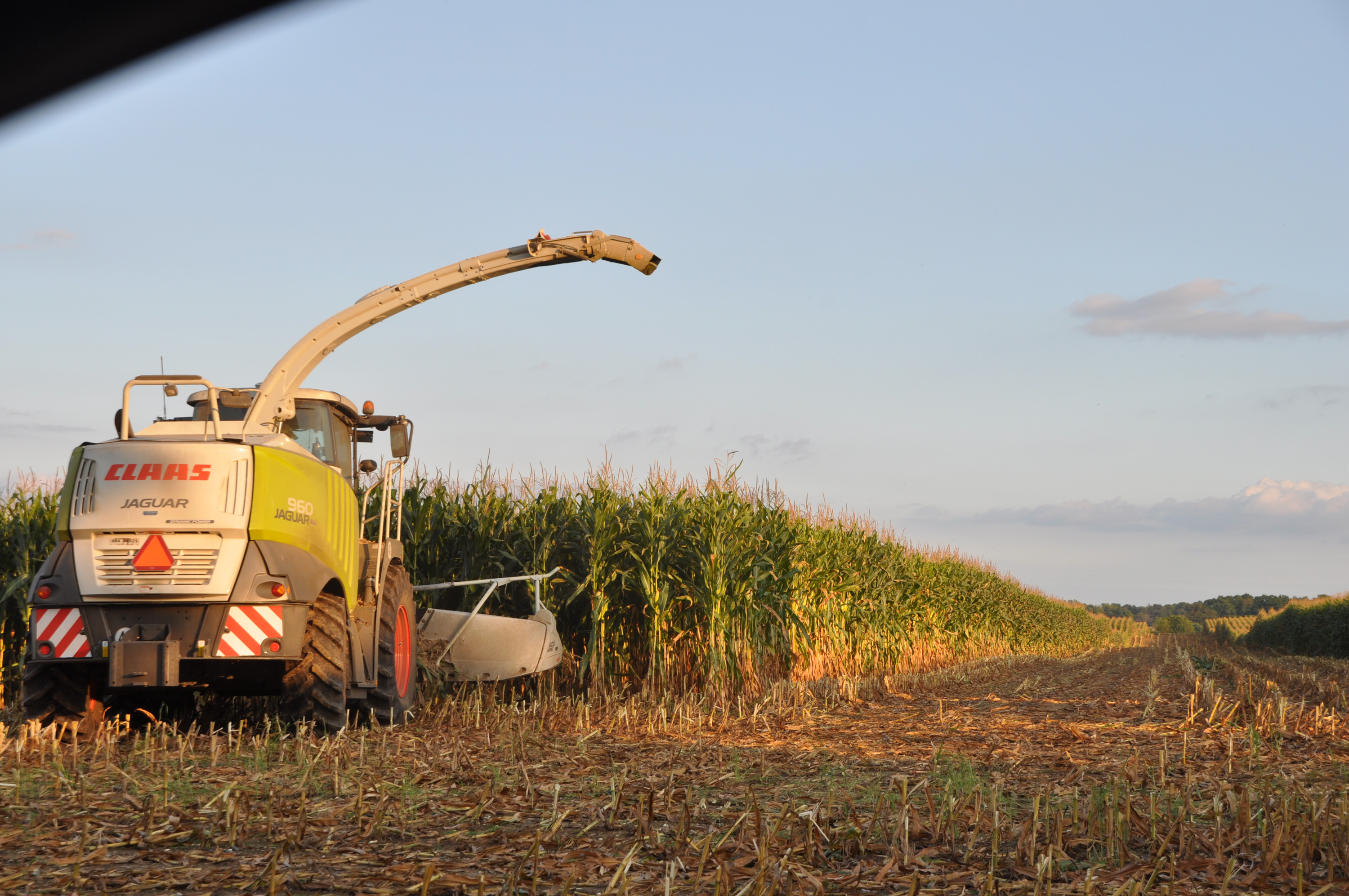
The chopper takes 10 rows of corn at a time and cuts it into about 1-inch pieces.

It’s amazing to watch how fast the corn stalks are fed into the chopper and then blown out the spout into the trucks.

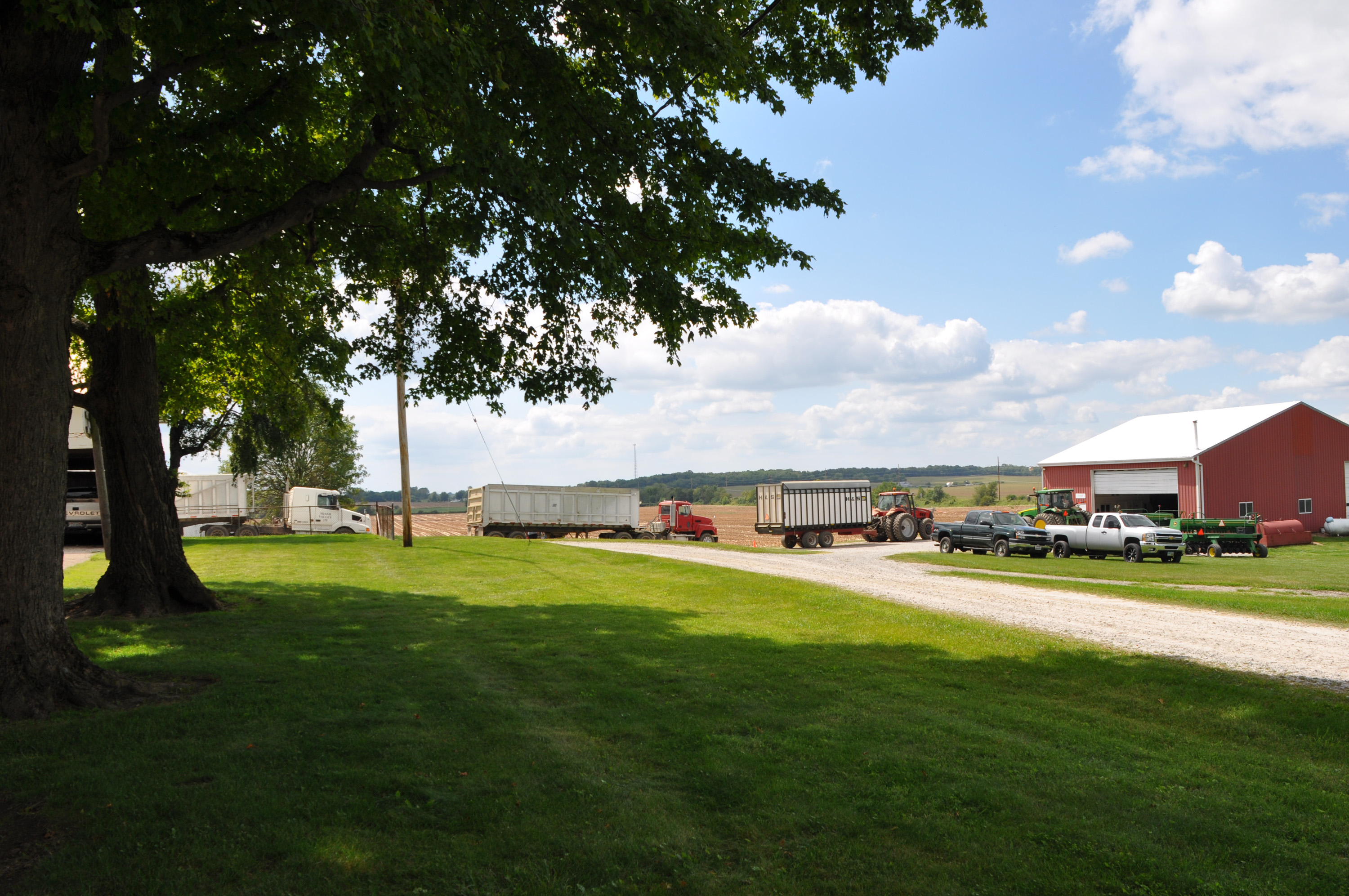
Tonight the trucks are lined up ready to go to the next field across the major state highway.

It takes about seven or eight buggies and/or semis to keep up with the chopper.
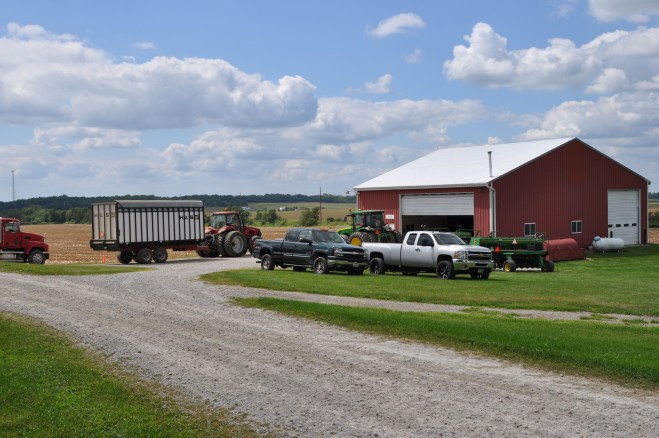


Heading to the next field.


At the same time, the dairy is putting on manure to the field we already have done. Their manure lagoon is just about full so they are working right behind the chopping crew to get it applied.

This was the first field we got done.
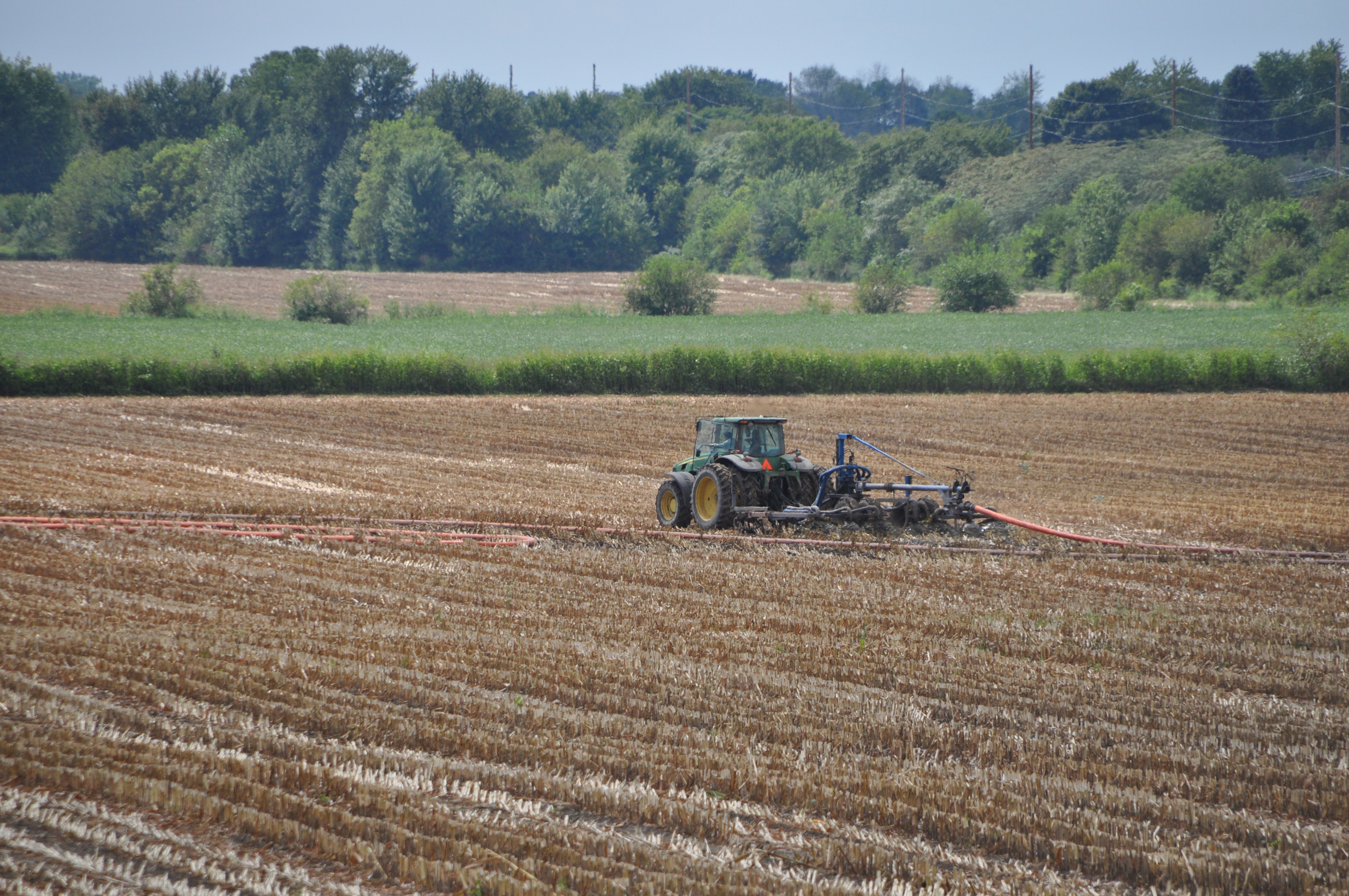
The manure applicator puts on about 13,000 gallons per acre.

Richard is getting the drills ready to plant 40 acres of alfalfa in another field.

It’s a good night to plant.
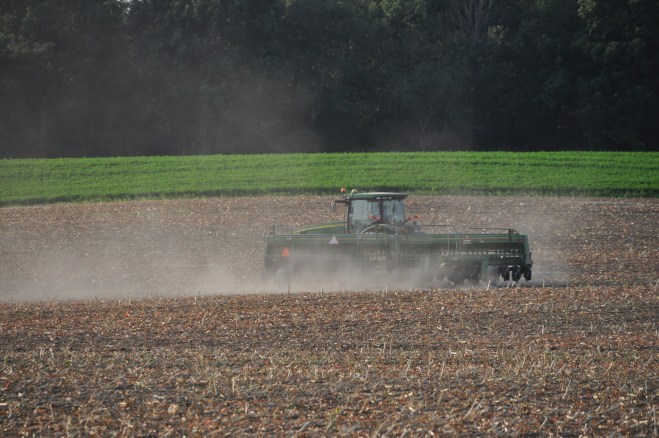
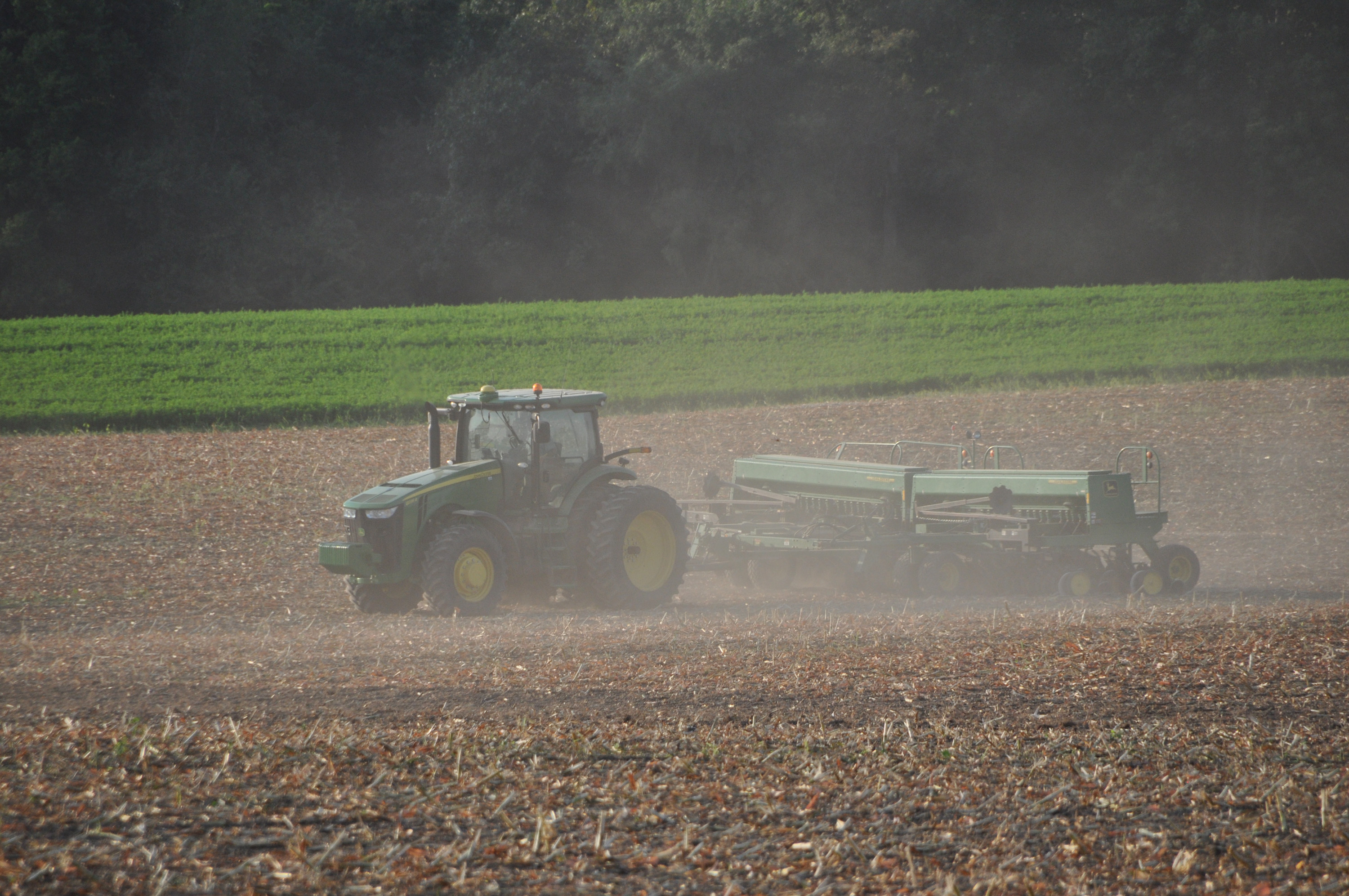
It’s a little dusty out there.

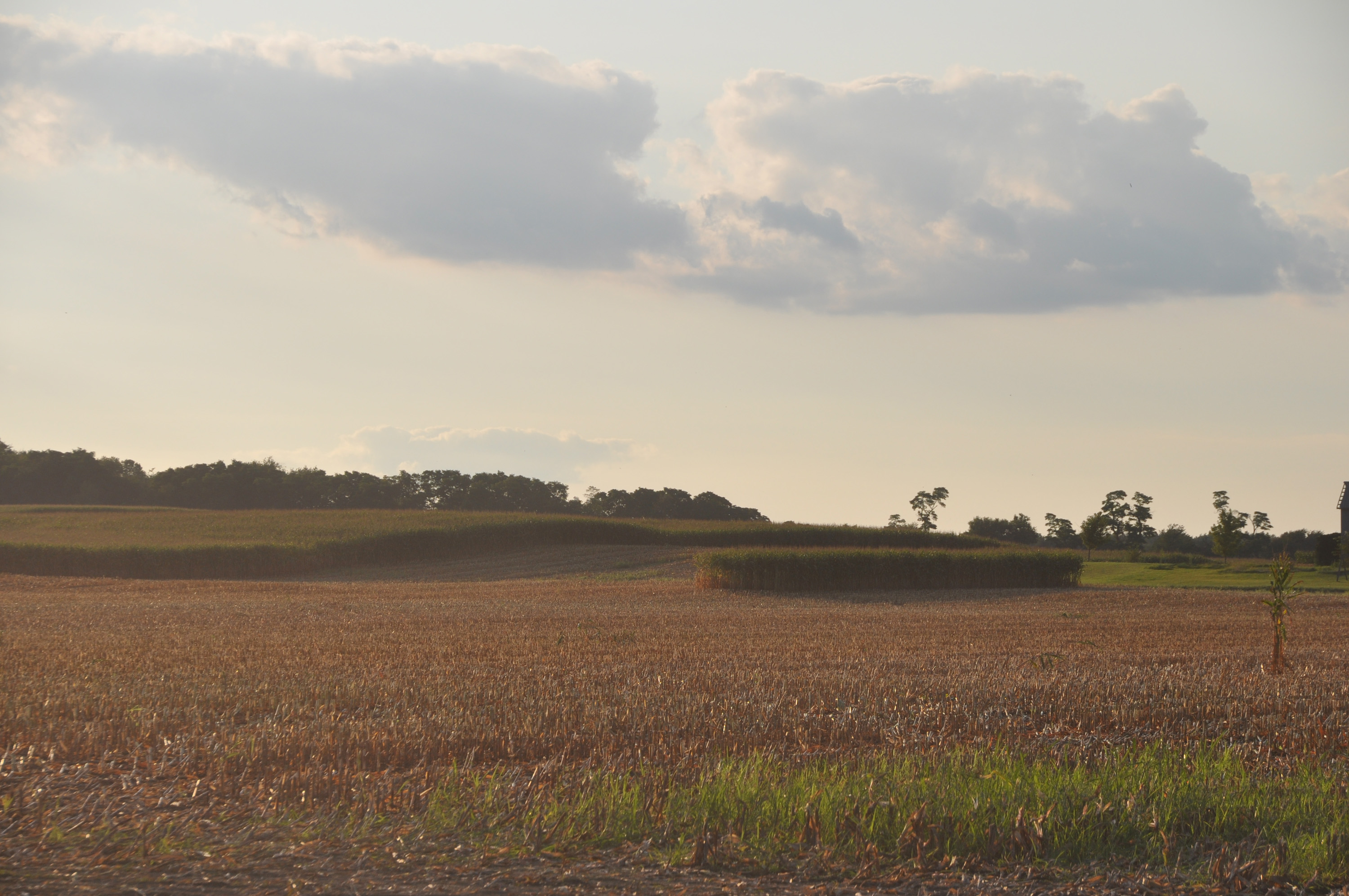
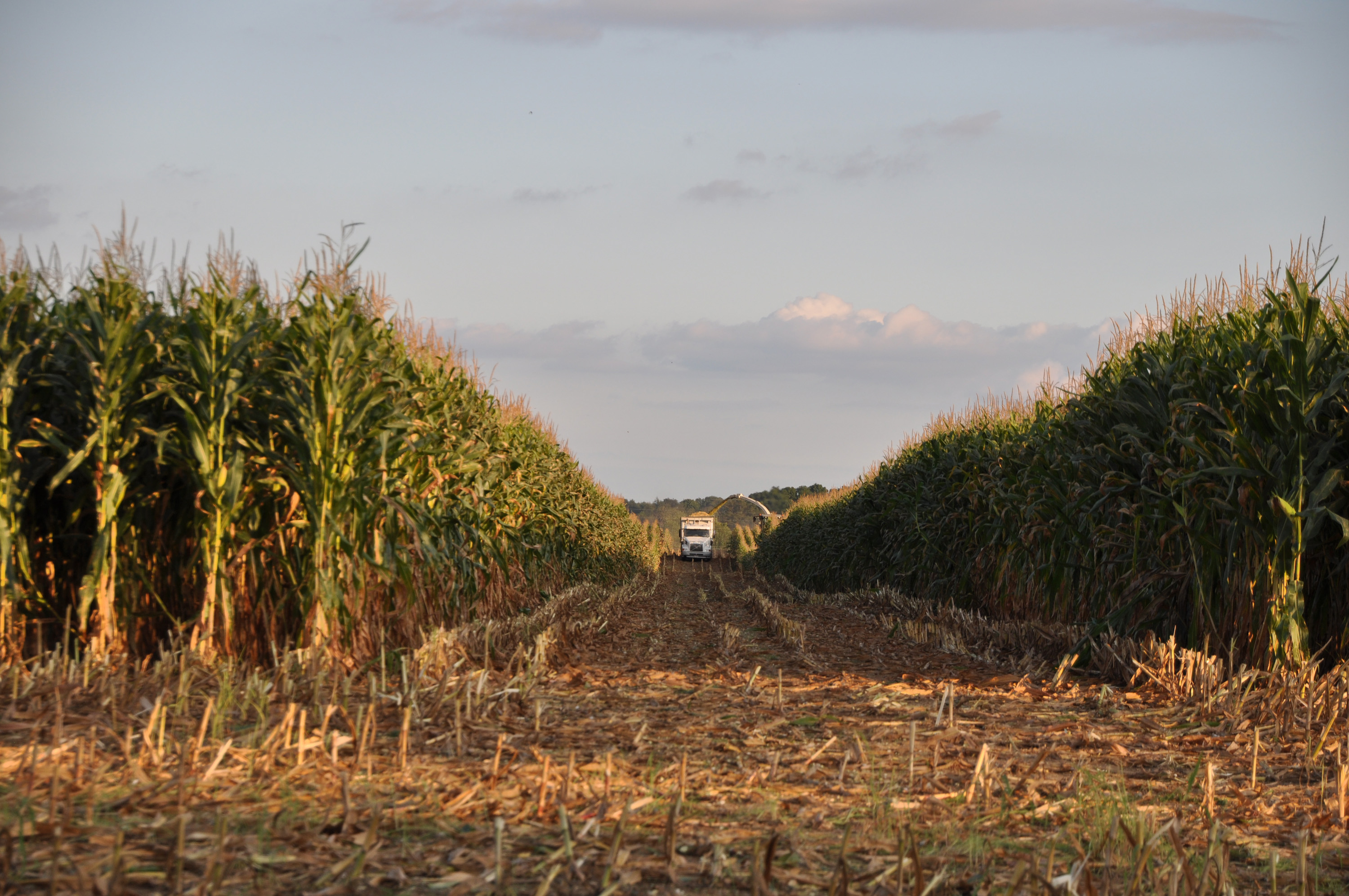
This is the field they are chopping in tonight.

This one is really full!

You can see how straight we can plant corn with the GPS on the tractor in the spring.

This is the other end of the field. You can just barely see the other tractor and buggy behind this truck waiting its turn.
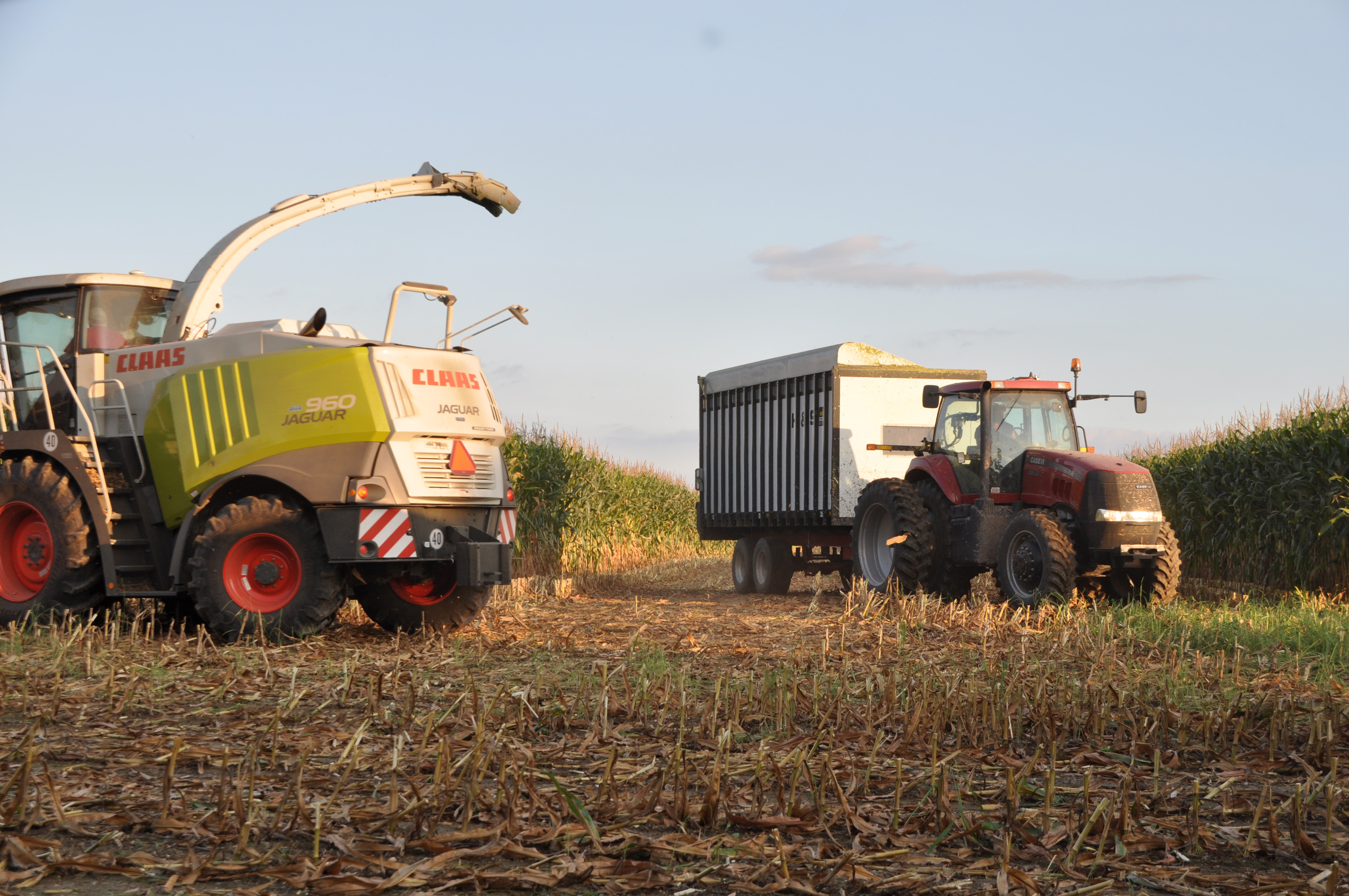
Turning around to head back.

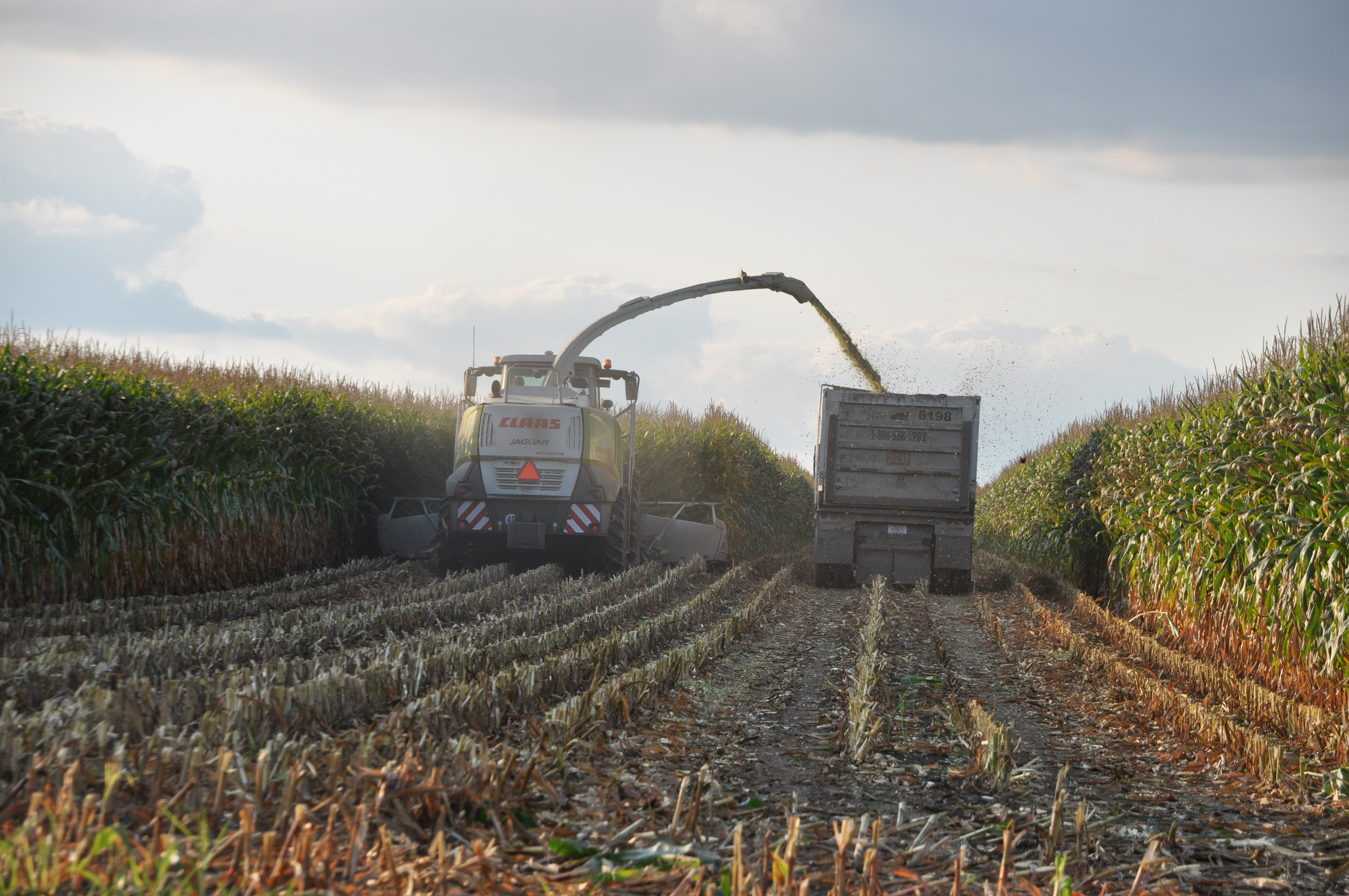




 Avalon Farms Ohio